

Advocacy Wasn’t the Plan. It Turned Out to Be Exactly What I Needed.
“Every time you’ve spoken about advocacy, you’ve smiled.”
When Mary started university, she had a plan. Like many students, she chose a degree with a
clear career path and expected her future to follow a predictable course. She studied social
work, determined to build a career helping people, and graduated with a First.
But life doesn’t always go to plan.
Throughout her studies, Mary faced setbacks and challenges that left her questioning where
she belonged. She knew she wanted to support people, particularly adults, but some of the
placements she undertook led her in very different directions. By the time she graduated, the
career she had worked towards no longer seemed within reach. Despite her qualifications and
academic success, she struggled to see where she could go next.
“I got a First. I did really well. But getting a First wasn’t good enough to get a job.”
Like many graduates, Mary experienced the gap between education and employment. She
attended interviews, explored different options, and found herself repeatedly asking what
came next. There was an expectation that a social work degree should lead directly into social
work. But deep down, something didn’t feel right.
What Mary wasn’t aware of at the time was that advocacy would prove to be exactly the
opportunity she was seeking.
In fact, she admits she had never seriously considered it an option given her qualifications.
Like many people, she saw social work as the destination and everything else as an
alternative route. Yet when advocacy entered her life, her perspective began to shift.
What attracted her was the opportunity to work directly alongside people, helping them
navigate complex situations, express their wishes, and have their voices heard. It was the kind
of meaningful, person-centred work she had hoped to find when she first chose her degree.
During her journey, Mary often felt defined by what others believed she should be doing, by
what experience she lacked, or by the career path people expected her to follow. Advocacy
felt different. Rather than focusing on limitations or assumptions, it focused on helping
people develop their strengths and find their own way forward.
“Advocacy doesn’t do that to you,” she says. “It says, ‘Right, come in, let me teach you, show
you how it’s done.'”
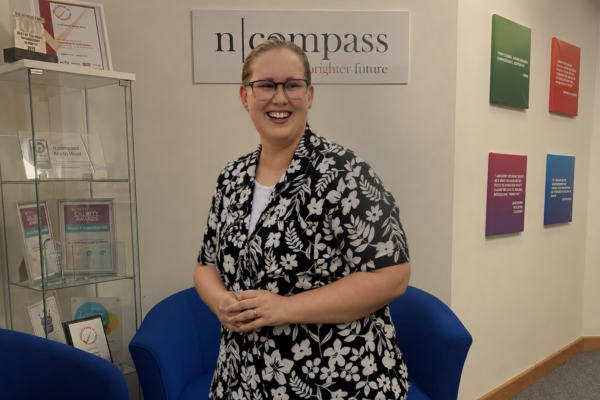
Today, Mary is a Multi-Specialist Advocate with N-Compass, supporting people through
some of the most challenging periods of their lives. She helps people prepare for meetings,
understand their rights, communicate their views, and ensure their voices are heard when
important decisions are being made.
What makes her particularly effective is not simply her qualifications. It is her determination,
empathy and ability to connect with people from all walks of life. Throughout her career, she
has learned to build trust, see beyond barriers and support individuals whose experiences and
perspectives may differ greatly from her own. She believes advocacy requires resilience,
authenticity and a willingness to stand alongside people when they need support most.
She also speaks passionately about the fulfilment she gets from advocacy.
At one point, she left a full-time role to return to advocacy part-time, despite the financial
uncertainty surrounding buying her first home.
Why?
Because she loved the work.
Her partner noticed it before she did.
“Every time you’ve spoken about advocacy, you’ve smiled.”
When discussing other job opportunities, there was hesitation. When discussing advocacy,
there was excitement. That observation became a turning point.
For Mary, advocacy offered something more valuable than a straightforward career path. It
offered purpose.
Mary’s story carries an important message for anyone graduating from university or
considering their next career move.
A qualification does not have to define your future. Earning a degree is a tremendous
achievement. It represents years of hard work, commitment and determination. It may not
immediately open doors, but it provides a springboard and demonstrates what you are capable
of achieving. It doesn’t dictate a single destination. Sometimes the skills, values and
experiences you gain along the way can lead you somewhere you never expected to go.
The career you expected to pursue may not be the one that ultimately fulfils you. Sometimes
the most rewarding opportunities are the ones you never knew existed. Sometimes the right
role aligns with your values, your strengths, and the difference you want to make in people’s
lives.
For Mary, advocacy became that role.
And while it may not have been the plan, she would be the first to say that it was exactly
where she was meant to be.